
Cruciate ligament rupture is one of the most common orthopedic problems in Labrador Retrievers, and now researchers have developed a groundbreaking DNA test to help identify specific dogs that may carry a higher level of risk.
Groundbreaking Research in Cruciate Ligament Ruptures from the University of Wisconsin
After considerable research and great help from our Wisconsin clients, Dr. Peter Muir and researchers in the Comparative Genetics and Orthopedic Research Laboratory at the University of Wisconsin-Madison School of Veterinary Medicine have developed a DNA test to detect Labs at risk of cruciate rupture. Over 1000 dogs were screened for cruciate disease and DNA tested to develop this test.
Research shows that 5 to 10% of Labradors will rupture one of their cranial cruciate ligaments (CCL). Cruciate damage – stretching, fraying, rupture or other damage – will lead to joint instability, lameness, pain, and arthritis in the stifle (knee) joint in the rear leg. This is comparable to anterior cruciate damage (ACL) commonly seen in humans.
Up to 50% of dogs who rupture one cruciate will rupture the second side within one year. Surgical repair can cost upwards of $5,000 per stifle if there is cruciate damage. Even with surgical repair, affected dogs will develop more arthritis in the joint and at a younger age than a normal dog.
How the DNA Test Works
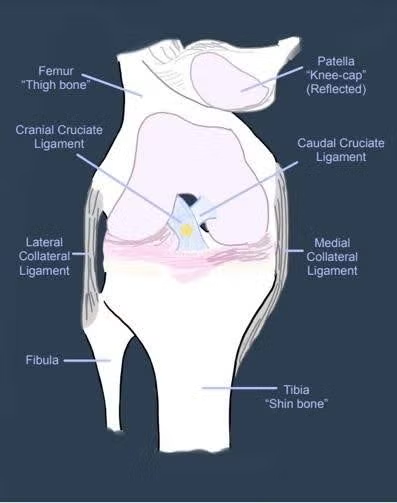
The DNA test shows there are multiple gene variations that act together, creating the probability that the affected dogs will have a high genetic risk of rupturing one or both cruciate ligaments. They found a heritability estimate of 0.62, meaning that for each individual Labrador that develops cruciate ligament rupture, approximately 62% of the risk is genetic, and the remaining 38% is environmental. From this research, the lab can now test individual Labrador Retrievers for the genetic risk of a cruciate ligament rupture with 98% accuracy.
This is the first DNA test for a complex genetic disorder developed for dogs, and it is likely that other breeds will eventually be included in testing.
Testing Costs and Availability
The test cost at this time is $250.00. Should you elect to test 5 or more dogs, the test is $225 per dog. The test can be run on either a cheek swab or a blood test. If you elect to run the blood test, there will be an additional fee for your veterinary staff to collect, process, and ship the sample to the lab. Testing requires 4 to 6 weeks for results at this time.
The Benefits of DNA Testing for CCL Tear Risk in Labradors
This test is a relatively expensive test compared to the genetic panels that are now available. However, the test will pay for itself many times over in one of three ways.
- Prior to purchasing a Labrador, you can have this DNA test run to show if the pup you are considering is at risk. This has special merit if your plans for your new pup include performance work such as field trials, hunt tests, hunting for recreation, or other sports. You may test the prospective pup or pups and determine which pup is best suited for your lifestyle based on this test and its outcomes.
- Should you find that the dog you already have in your home is at risk, this allows you to take preventive measures to reduce the risk of rupture. These include keeping the dog at an ideal body weight, using glucosamine supplements, and keeping the dog in a fitness program. Delaying spaying or neutering may also help reduce the risk of cruciate damage. Regular veterinary checkups can help with early detection of joint damage. Additionally, if your dog develops lameness, early surgical intervention can minimize arthritis development.
- Since cruciate disease has a genetic as well as environmental component, by breeding male to female dogs who are not at risk of developing cruciate disease, we can breed away from this debilitating disorder. Used correctly, this approach can lead to reduced disease prevalence in the population over time. However, like all genetic disorders, using this test as your only guidance for breeding decisions will damage the genetic diversity of the breed.
Learn More About Advances in Cruciate Ligament Rupture Risk-Assessment
The development of a DNA test for cruciate ligament rupture risk in Labrador Retrievers marks an exciting step forward in canine health and genetics. Thanks to the research done at the University of Wisconsin owners, breeders, and veterinarians can identify CCL tear risks early on and take proactive steps to reduce suffering and improve long-term health outcomes.
More information about the DNA testing is available at:
The Comparative Genetics Laboratory
University of Wisconsin School of Veterinary Medicine
Email: [email protected]
Phone: (608) 265-5828
Facebook: SVM Genetics
Instagram: @svmgenetics
If you have questions and you'd like to reach out to us, you can call us directly at (920) 269-4072, or you can email us at [email protected]. Don't forget to follow us on social media Facebook, Instagram.