
Our dogs can be impacted by numerous illnesses and diseases, but perhaps none are as concerning and overlooked by breeders and owners alike as Canine Brucellosis. This contagious infection can affect a dog’s reproductive health, cause chronic illness, and even pose risks to humans, making it a disease every dog owner should understand.
What Is Brucellosis in Dogs?
Brucellosis is a contagious bacterial disease found in dogs, most commonly spread by mating. It is the ONLY bloodborne pathogen recognized by OSHA in veterinary medicine. The concern is that this bacteria is zoonotic, meaning it can be spread from animals to humans. Since 60% of American households own one or more dogs, there is valid concern that an infected dog can cause human illness.
How Dog Brucellosis Spreads
Brucellosis, which is caused by Brucella canis or B. canis, can be spread dog to dog without mating, but this is the most common route of transmission. Even dogs that are spayed or neutered can be infected.
Transmission of Brucellosis dog-to-dog may occur venereally. However, other routes of transmission are also common – these include ingestion or inhalation of aborted materials, transplacental transmission, and contact of any bodily secretions with the mucus membranes.
Brucellosis is not considered curable in dogs. For this reason, a persistently infected dog is likely to be euthanized, often by state mandate. One infected dog in a kennel or household can end an entire breeding program.
Can Brucellosis Spread to Humans?
Yes, Brucellosis in dogs can absolutely spread to humans under the right conditions. Brucellosis in humans is also known as “undulant fever,” as once infected, this chronic disease is difficult to diagnose and can last a lifetime, causing intermittent fever spikes. It can be spread from a dog to humans by contact with any body fluid from a dog, meaning human exposure to Brucella canis can be by ingestion, mucus membrane contact, skin wounds, or inhalation of the organism. Masks, goggles, and gloves should be worn by personnel handling suspected animals, bedding, or tissues.
One of the first documented human cases (1966) was an air conditioner repairman who was exposed under a porch where a bitch whelped a litter of infected pups.
Canine Brucellosis in humans can be serious and difficult to diagnose, with the illness frequently being overlooked by physicians. Symptoms of Brucellosis in humans include:
- Recurrent fever
- Lung and heart disease
- Bone infections
- Muscle and back ache
- Loss of Appetite
- Sweat
- Fatigue
- Headaches
- Enlarged lymph nodes and other flu-like symptoms
It is more likely to occur and cause serious symptoms in the immunocompromised patient (children, the elderly, patients on chemotherapy, patients on corticosteroids or organ rejection drugs, patients with HIV-AIDS, and those with chronic diseases such as diabetes or leukemia). Although few human cases have been reported, we have a responsibility to educate and protect our clients and staff.
If a client or staff member is exposed or may have symptoms of Brucellosis, he or she should contact their physician. Early treatment with appropriate antibiotics is usually effective.
The Prevalence of Canine Brucellosis in the United States
There have been an increasing number of outbreaks throughout the United States, particularly in commercial breeding operations. As infected dogs move out of these facilities and co-mingle with other dogs as breeding stock and rescued dogs, Brucellosis may easily spread into other breeding facilities and clients’ homes.
Dogs may be exposed by routes other than venereal transmission, such as through casual contact with urine and genital discharges at dog events and breeders who rescue dogs from breeding facilities. Veterinarians and breeders must be less complacent about testing for this important and devastating disease.
Symptoms of Brucellosis in Dogs
Symptoms in breeding dogs include infertility, sterility, pregnancy loss, and infected testes. In non-breeding dogs, the most common symptom is discospondylitis – an inflammatory change in the spaces between the vertebrae.
Brucella canis symptoms in bred dogs will affect both the bitch and the puppies. Symptoms in the bitch include apparent infertility due to early fetal death, resorption, abortion, and the delivery of weak or sick pups. Late-term abortion after 45 to 60 days of pregnancy is common. Abortion is accompanied by a long-standing vaginal discharge.
Aborted pups often show signs of decomposition. Pups born alive may die soon after birth, or show signs of illness. The sick pups may have enlarged lymph nodes, recurrent fevers, and uveitis. Affected bitches may also have fevers of undetermined origin, discospondylitis, and uveitis.
Understanding When a Brucellosis Test for Dogs Is Needed
The Society for Theriogenology, the veterinarians who provide veterinary care for breeding dogs, recognize Brucella canis as a threat to both breeding and pet dogs and their owners, as well as immunocompromised members of the community.
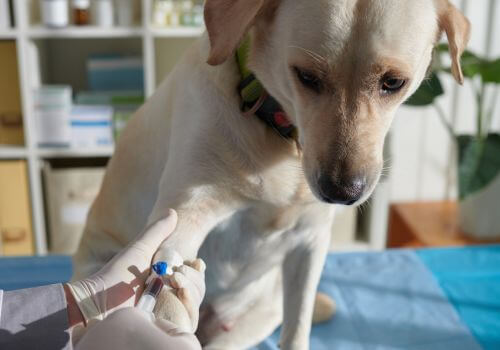
The Society for Theriogenology recommends that all breeding dogs be tested based on risk factors and frequency of breeding and found to be negative prior to breeding. All dogs and bitches that have direct sexual contact with each other, dogs that will have their semen frozen, and all dogs and bitches with symptoms of Brucellosis should have screening blood tests.
For breeding dogs, testing is recommended before every mating and before semen collection or freezing. Because this infection can persist and survive in frozen semen, a negative test result before use is critical.
Currently, there is no USDA-approved in-office blood test that veterinarians can perform in-house at their clinic to diagnose canine brucellosis. Tests that were once available through USDA systems have been discontinued and are no longer offered for routine veterinary use. To meet the highest standards, the Society for Theriogenology recommends that brucellosis testing be performed only by reference diagnostic laboratories using validated assays with positive controls. These labs perform accepted serologic methods such as AGID (agar gel immunodiffusion), ELISA, or multiplex antibody detection. Because your dog’s sample must be shipped and processed off-site, results take longer to return, and the cost can be higher than standard in-clinic tests.
Preventing Outbreaks of Canine Brucellosis
Managing an outbreak of Canine Brucellosis: In many states, Canine Brucellosis is a reportable disease. This means if you confirm a Brucellosis case, you must contact your state veterinarian. You only need to report a positive test result on the RSAT that is confirmed on either blood culture, PCR, and/or the AGID test. These veterinary authorities may dictate the management of testing and culling infected dogs and those in contact with infected dogs.
Euthanasia of all CULTURE-positive dogs is frequently recommended. This is recommended because antibiotic regimens are not curative, and the disease has zoonotic potential.
During an outbreak, all dogs in the kennel should be tested monthly for three months until all the dogs housed in the kennel are negative on two successive tests. All females should be separated at birthing to reduce transmission in the kennel.
To prevent outbreaks of Canine Brucellosis in a kennel, it is recommended that all breeding stock in the kennel be tested once each year. Test all dogs prior to introduction into a breeding colony twice at four to six week intervals. Females that abort should be assumed positive and should be isolated until proven otherwise.
What Happens When a Dog Is Infected With Canine Brucellosis
If an individual dog is infected, he or she must be sexually altered (ovariohysterectomized or castrated) and placed on long-term antibiotic therapy or euthanized. Antibiotic regimens can be prescribed by your veterinarian and should be strictly followed. However, it is important for owners and breeders to know that there is a great cost associated with long-term antibiotic therapy, ongoing testing for monitoring resolution of the disease, and side effects associated with treatment.
Spayed females pose little risk of disease to family members after they are ovariohysterectomized. However, Brucellosis can be harbored in the prostate, so it may not be possible to clear the male dog from this disease even with castration and long-term antibiotic therapy. The zoonotic risk of the disease must be discussed with the client, particularly in households with young children or immunocompromised members.
If one or more individual dogs in a group housing situation are infected, the entire colony must be euthanized or tested and culled multiple times. The following protocol has been recommended:
- Confirm Brucellosis is present based on PCR, blood cultures, or cultures from infected tissues.
- Strictly limit movement of dogs in or out of the kennel for any reason.
- Identify ALL infected dogs.
- Try to determine the source of infection and all dogs in contact with infected dogs. Blood cultures are the recommended test.
- Cease breeding.
- Test all animals in the facility, and cull all infected animals. This often means euthanasia of large groups of dogs.
- Separate groups of dogs to minimize transmission.
- Retest all animals in the facility every month. Continue to cull infected animals as needed.
The facility is not considered clear of Brucellosis until all the animals have tested negative for three consecutive months. This may require five to seven months of testing and culling. Unless the kennel is closed to incoming and outgoing dogs and breeding is temporarily ceased, the kennel may never be cleared of Brucellosis.
Recognizing the signs, understanding how it spreads, and knowing the steps for prevention and management are essential for protecting dogs and our community. If you have any questions about Brucellosis in dogs, you can call us directly at (920) 269-4072, or you can email us at [email protected].